El Niño Storms This Winter: Will Homeowners or Renters Insurance Cover Flood Damage? What to Check Before the 30-Day Flood Insurance Wait
With El Niño storms coming this winter, will my homeowners or renters policy cover flood damage? The short answer: the California Department of Insurance (CDI) says homeowners, renters, and commercial policies typically exclude flood, mudslide, and debris flow damage, and that flood insurance generally takes effect 30 days after purchase. This post uses NOAA, CDI, and FEMA information to cover the winter outlook, what to check in your own policy, and how to prepare before the storms.
What Is the Official El Niño Outlook for This Winter?
NOAA's Climate Prediction Center (CPC) said in its November 12 discussion that an El Niño Advisory is in effect, El Niño continues to strengthen, and the chance of a strong-to-very strong El Niño through January-March 2027 remains greater than 79%. It puts the chance of a historic event exceeding every El Niño since 1950 at about 60%, better than even odds. The CPC adds that even with a very strong El Niño, impacts consistent with El Niño become more likely but are not guaranteed.
First, the NOAA winter outlook. NOAA expects wetter-than-average conditions across the southern U.S., from California to Florida, from December through February, and its next update is scheduled for November 19.
Second, the state is preparing too. According to the CDI, Governor Gavin Newsom signed an emergency declaration on September 21 ahead of a "likely historic" El Niño, and the Insurance Commissioner urged Californians to review their coverage because flooding, mudslide, and debris-flow risks rise.
What Do Homeowners and Renters Policies Cover, and What Do They Leave Out?
The CDI says homeowners, renters, and commercial policies generally exclude damage from flood, mudslides, and debris flows, with possible exceptions when a wildfire or another covered peril is a direct or indirect cause. Terms vary by policy, so read the items below with the word "generally" in mind.
First, wind-driven rain. The CDI says policies may cover certain water damage caused by wind-driven rain, and that damage from fallen trees is generally covered under standard homeowners policies. You should still confirm exactly how far your own policy goes.
Second, a tenant's belongings. The CDI says a landlord's insurance generally does not cover a tenant's personal belongings, so review what your renters policy covers before the storms. As we covered in an earlier post, flood is also an item to check separately on a renters policy.
Third, earthquake insurance does not cover flood either. According to the CDI's earthquake insurance guide, earthquake coverage excludes outside water damage such as flood or sewer and drain back-up. Having earthquake insurance does not mean you are protected from flooding.
Fourth, FAIR Plan policyholders. The CDI says the California FAIR Plan currently does not cover storm-related damage unless you have purchased a supplemental "difference in conditions" (DIC) policy from another insurer. If you are on a FAIR Plan policy, be sure to check this.

Why Look Into Flood Insurance Right Now?
According to the CDI, the National Flood Insurance Program (NFIP) writes most flood insurance in California, and private flood insurance is also available. Flood insurance generally takes effect 30 days after purchase. FEMA likewise says there is typically a 30-day waiting period for an NFIP policy, and that buying when a storm is approaching may not get coverage in place in time. If you bought today, November 16, coverage would take effect around mid-December. The CDI urges people to plan ahead rather than wait until a storm is approaching.
First, an exception to the 30-day wait. The CDI explains that if you buy a home in a designated high-risk area with a mortgage from a federally regulated lender, the lender requires flood insurance and the policy takes effect immediately without the 30-day wait. If you are preparing to buy, ask your loan officer whether flood insurance will be part of your loan conditions.
Second, what flood insurance covers. The CDI describes a flood as a general and temporary condition of partial or complete inundation of two or more acres of normally dry land, or of two or more properties (at least one of which is yours). Losses from earth movement, such as earthquake, landslide, land subsidence, sinkholes, movement of land from accumulated water, and gradual erosion, are generally excluded even when caused by a flood. So do not assume that flood insurance also covers a landslide.
Third, renters can buy it too. The CDI says the NFIP provides flood insurance to property owners, renters, and business owners in participating communities. If your renters policy leaves out flood, ask your agent whether your community participates. If your agent does not sell flood insurance, the CDI says you can call the NFIP Help Center at 1-877-336-2627 for an agent referral.

What to Do Before the Storms Arrive
Here is a summary of the preparation steps the CDI recommends.
First, read your policy and coverage. Contact your insurance agent or company and confirm how your policy treats flood, mudslide, wind-driven rain, and fallen trees.
Second, check the comprehensive coverage on your auto policy. The CDI says comprehensive coverage can cover storm damage such as flooding and fallen trees, that it is optional, and that you can check your declaration page to see whether it is included.
Third, create a home inventory. Use your smartphone to photograph or record your home and belongings, and keep copies of your insurance documents somewhere safe and easy to reach. A current inventory makes it easier to document your belongings if you need to file a claim.
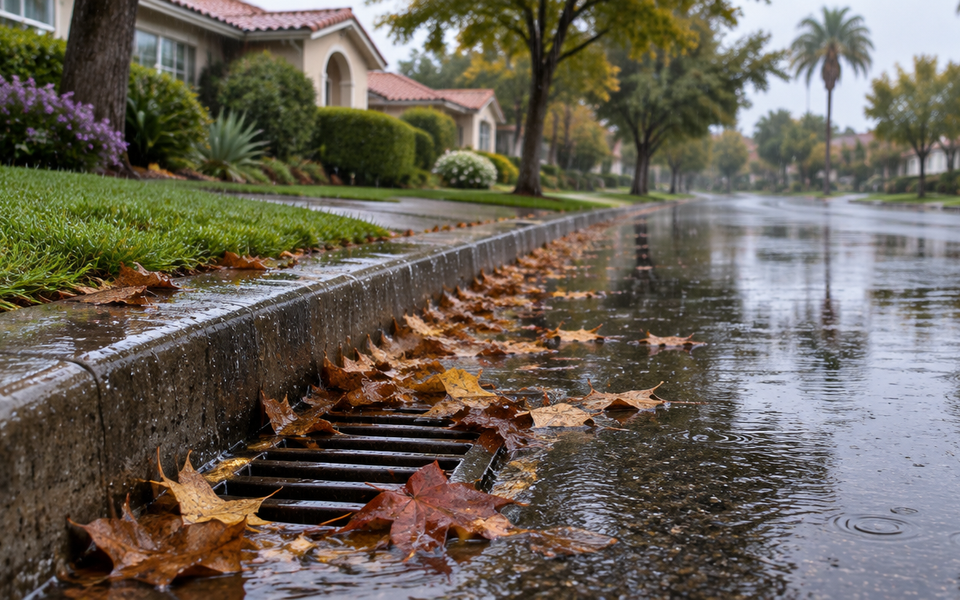
Fourth, prepare your home and family. The CDI advises following local emergency alerts and evacuation instructions, securing loose outdoor items, clearing gutters and drains, and having emergency supplies and important documents ready. For this week, a news report citing the National Weather Service as of November 16 expects 1 to 3 inches of rain in Southern California, with 2 to 5 inches possible on southwest-facing mountain slopes and foothills, and a high surf advisory for Orange County through Wednesday morning. Check the latest NWS forecast when you read this.

Frequently Asked Questions
"I have renters insurance. Will it cover flood damage?" The CDI says renters policies also generally exclude flood and mudslide damage. Read the exclusions in your renters policy, and look into NFIP or private flood insurance separately if you need it.
"I live near a wildfire burn area. What about mudslides and debris flows?" The CDI notified insurers of their legal duty to cover damage from a mudslide, debris flow, or similar event caused by wildfires that weakened hillsides, and it offers a consumer fact sheet. Whether a specific loss qualifies varies by case, so confirm with your insurer and the CDI Consumer Hotline (800-927-4357).
"If I buy flood insurance now, will it cover a storm that arrives today?" A policy that is already in effect covers losses within its terms. A policy you buy today generally takes effect after 30 days, so it may not apply to this week's storm. Check the effective date written on your policy.
In Summary
The CDI says homeowners and renters policies generally exclude flood, mudslide, and debris flow, the FAIR Plan does not cover storm damage, and flood insurance generally takes effect 30 days after purchase. With NOAA putting the chance of a strong El Niño this winter above 79%, check five things before the storms: the exclusions in your policy, comprehensive coverage on your auto policy, whether you need flood insurance, a home inventory, and clear gutters and drains.
If you are preparing to buy or rent in Orange County or Irvine, feel free to leave a comment or DM with your questions. This article is general information and not a sale or recommendation of any insurance product. Coverage and terms vary by insurer and policy, so confirm with your insurer or a licensed insurance professional before you buy. Sources: NOAA Climate Prediction Center ENSO Diagnostic Discussion (Nov. 12, 2026), NOAA "El Nino looms large over U.S. Winter Outlook", California Department of Insurance "Commissioner Lara urges Californians to review insurance coverage before 'likely historic' El Niño storms hit" (Sept. 22, 2026), CDI "Flood Insurance Resources", CDI "Earthquake Insurance", and FEMA "Flood Insurance".
Feel free to reach out anytime for buying or leasing properties in Irvine and Orange County.

Michael Kim
REAL Estate Agent
DRE# 02282988 | C&C Realty Group Inc
📞 949-517-2945
C&C REALTY GROUP
LUXURY REAL ESTATE